
Lithium ion batteries have become the invisible backbone of today’s electrified world. Their high energy density, lightweight design, long cycle life, and rapid charging capabilities make them indispensable across countless industries. While most people recognize them for powering mobile phones and electric vehicles, the true scope of lithium ion battery applications extends far beyond these uses, encompassing a wide range of specialized and rapidly growing sectors—each with its own unique performance requirements.
For a quick overview:
Common applications for lithium ion batteries include consumer electronics (smartphones, laptops, wearables), electric vehicles, electric marine vessels, drones, energy storage systems (residential solar batteries, commercial and industrial storage), power tools, medical devices (portable ventilators, implantable neurostimulators), industrial robots, and various emerging industries. We will examine these specific sectors in greater detail below.

Lithium ion Batteries Applications: Consumer Electronics
Smartphones and Tablets
Lithium-polymer batteries currently dominate this type of application. Manufacturers typically require batteries that offer high energy density and a slim, lightweight profile, while meeting specifications such as a thermal limit of 45°C, a cycle life exceeding 800 cycles, and 80% capacity retention. The use of silicon-based anode materials enables faster charging speeds without the occurrence of lithium plating.
Laptops and Ultrabooks
It typically utilizes 2–4 cylindrical 18650 or 21700 battery cells, or custom pouch cells. Requirements include providing sustained high discharge power to the processor, supporting pass-through power delivery, and meeting strict safety certifications (UL 2054, IEC 62133).
Wearable Devices
Wearable devices typically include smartwatches, fitness trackers, and AR glasses.
This application sector requires curved, ultra-compact micro lithium-polymer batteries with capacities ranging from 30 to 300 mAh. Key priorities include low-temperature performance (suitable for skin contact), solid-state prototypes for safety, and wireless charging integration.
Wireless Headphones
Typical lithium-ion coin cells or small pouch cells can fit into the earbud stems or the charging case. The charging case itself houses a higher-capacity lithium-ion battery, providing a total runtime of over 20 hours. Since the earbuds often remain idle for days at a time, strict voltage cut-off and low self-discharge are crucial.
Digital Cameras and Handheld Gaming Devices
DSLR and mirrorless cameras require high pulse currents for continuous shooting and 4K/8K video recording. They typically utilize custom 7.2V/7.4V battery packs built with high-discharge-rate 18650 or 18500 cells.
Handheld gaming devices generally employ symmetrically shaped pouch cells, which are optimized to withstand a sustained 15W gaming load without overheating.
Portable Power Bank
This category ranges from pocket-sized, lipstick-style 5,000 mAh chargers to USB-C laptop power banks delivering over 100W of power. Multiple 21700 or polymer cells are packaged in series-parallel configurations, requiring sophisticated bidirectional buck-boost converters and rigorous temperature control.
Lithium ion Battery Applications: Electric Mobility
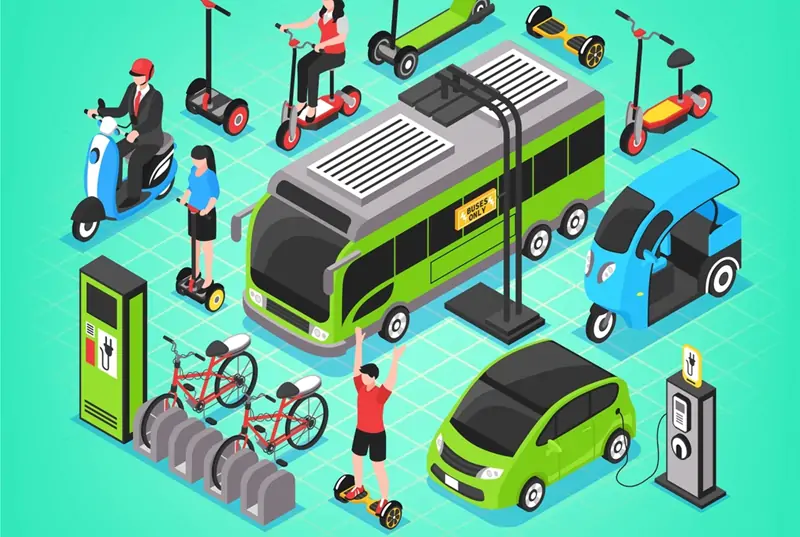
Lithium-ion batteries for mobility applications prioritize energy density, cycle life, safety, and cost per kilowatt-hour. The sector is diverging into highly specialized market segments.
Battery Electric Vehicle (BEV)
Electric vehicle companies typically utilize large-format prismatic or 4680 cylindrical cells based on NMC, LFP, or upcoming solid-state chemistries. Battery packs generally operate at 400V or 800V, delivering peak power outputs ranging from 200 kW to over 500 kW. Achieving 10-minute fast charging without dendrite formation is the ultimate goal, a feat that requires active thermal management.
Electric Buses and Commercial Trucks
Lithium iron phosphate (LFP) batteries dominate the electric bus and commercial truck sectors due to their lower cost, excellent thermal stability, and a cycle life exceeding 6,000 cycles. These buses typically utilize swappable battery packs or roof-mounted battery packs. They are charged overnight at depots and undergo opportunity charging via pantographs during operation, raising the battery pack voltage above 600V.
Electric Two-wheelers
Electric bicycles, electric scooters, and electric motorcycles all fall within this application sector.
Electric Bicycles: 36V–48V downtube or rear-rack battery packs, typically utilizing 18650 or 21700 cells with capacities of 10–20Ah.
Shared Electric Scooters: Typically feature hot-swappable 36V battery packs with tamper-resistant reinforcement, GPS, and BMS locking capabilities.
Electric Motorcycles: Typically utilize high-voltage battery packs (100V+) capable of peak power outputs up to 100kW, requiring liquid cooling.
Low-speed Electric Vehicles
Low-speed electric vehicles typically include golf carts, community electric vehicles, and airport shuttles.
These applications often utilize deep-cycle 48V lithium iron phosphate (LFP) batteries or flooded lead-acid battery packs. Key requirements include a simple Battery Management System (BMS), high vibration resistance, and a wide State of Charge (SOC) operating range. These battery packs are generally user-serviceable and cost-sensitive.
Electric Ships
Marine lithium-ion batteries must meet the IP67 waterproof rating, withstand salt spray corrosion, and pass impact tests. High-capacity systems (exceeding 500 kWh) utilize prismatic lithium iron phosphate (LFP) cells with integrated fire suppression capabilities. Such batteries are commonly used in vessels such as yachts and ferries.
Electric Aviation and Electric Vertical Take-off and Landing (eVTOL) Aircraft
eVTOL aircraft require batteries with an energy density exceeding 300 Wh/kg, a continuous discharge rate above 3C, and a peak discharge rate of 5C during vertical takeoff and landing. Safety is paramount; any failure could lead to catastrophic consequences. Semi-solid-state batteries and lithium-metal batteries are currently undergoing testing. The battery packs utilize high-efficiency liquid cooling and cell-level isolation technologies.
Applications of Lithium ion Battery: Energy Storage System (ESS)
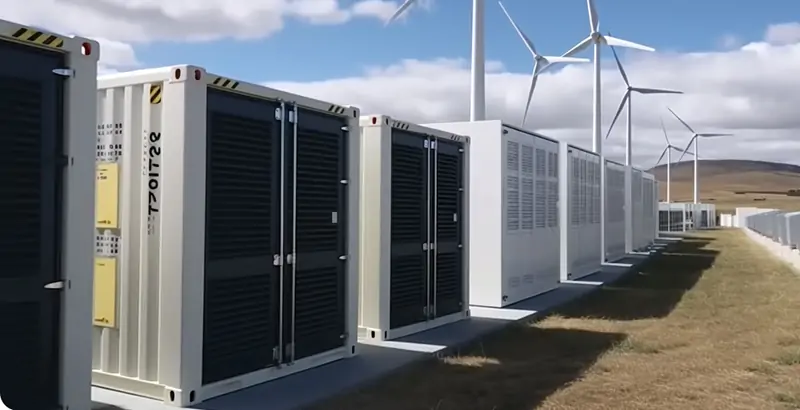
Grid-connected and user-side energy storage represent a multi-billion-dollar segment of the lithium-ion battery market, driven primarily by renewable energy.
Residential Solar Energy Storage
Typically, AC- or DC-coupled lithium iron phosphate (LFP) battery packs with a capacity of 5–15 kWh are used. They require a long cycle life, the ability to operate with daily cycling, and seamless islanding capability. The batteries must be able to withstand garage temperatures (ranging from -10°C to 50°C) and be compatible with hybrid inverters.
Commercial and Industrial Energy Storage
Load-shifting and peak-shaving systems (ranging from 50 kWh to several megawatt-hours) installed at factories, supermarkets, and office buildings. The containerized lithium iron phosphate (LFP) battery packs operate at DC voltages exceeding 1000V. An advanced Battery Management System (BMS) balances hundreds of series-connected cells and communicates with the Building Management System via Modbus/CAN bus.
Utility-scale Grid Energy Storage
Large-scale energy storage facilities with capacities exceeding 1 GWh. These facilities utilize lithium iron phosphate (LFP) batteries housed in 20-foot containers to provide frequency regulation, capacity reserves, and renewable energy stabilization. Fire suppression systems (such as aerosol or water mist) and ultra-fast state estimation algorithms are critical components.
Telecom Base Station Batteries
In remote or off-grid areas, 48V lithium-ion battery cabinets have replaced lead-acid batteries. They offer a longer cycle life, a more compact footprint, and intelligent remote monitoring capabilities. For 5G network deployments, battery packs installed on small-cell poles must be capable of withstanding extreme outdoor conditions and vandalism.
Data Center Uninterruptible Power Supply (UPS)
Lithium-ion batteries in UPS systems are lighter, charge faster, and have a longer lifespan than VRLA batteries. Centralized lithium-ion UPS racks are typically deployed in data center equipment rooms, featuring continuous thermal monitoring and isolation-based protection to meet NFPA 855 safety standards.
Uses of Lithium ion Battery: Industrial and Professional Applications
Power Tools
Power tools typically include electric drills, electric saws, impact wrenches, and the like.
These applications generally utilize high-rate 18650 or 21700 battery cells capable of delivering continuous currents of 20–40A. The 18V–36V slide-on battery packs must be dust-proof, moisture-resistant, and drop-resistant. Communication between the tool and the battery allows the output to be adjusted based on the material type, thereby preventing overheating.
Outdoor Power Equipment
Outdoor power equipment typically includes items such as lawnmowers, chainsaws, and leaf blowers.
Such equipment requires high-capacity backpack batteries or battery packs rated at 56V or higher. These packs feature internal forced-air cooling ducts, enabling them to sustain a continuous load of 2 kW—even when mowing wet grass.
Robots and Automated Guided Vehicles (AGVs)
Factory AGVs and warehouse robots typically utilize 24V or 48V lithium iron phosphate (LFP) battery packs, charged via opportunity charging contacts. Since battery swapping is common, hot-swapping capabilities and ultra-reliable connector systems are required.
Material Handling
Common material handling equipment includes forklifts and pallet trucks.
Counterbalanced forklifts utilize 80V, 400–800Ah lithium iron phosphate (LFP) battery packs. While the battery’s weight acts as a counterweight—saving space compared to other configurations—additional counterweighting may sometimes be required. Rapid opportunity charging during breaks eliminates the need for battery swapping, resulting in significant operational cost savings.
Portable Test and Measurement Instruments
Thermal imaging cameras, ultrasonic flaw detectors and spectrum analyzers require low self-discharge lithium-ion battery packs that can be left in a truck for months and start up immediately.
Agricultural Drone
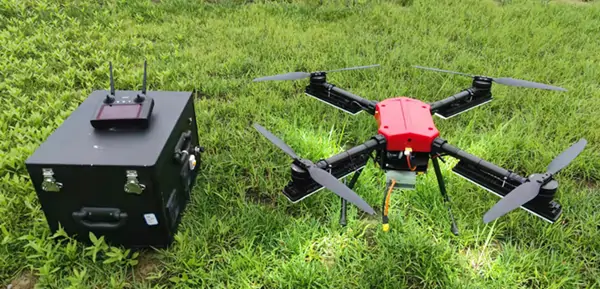
Drones used for pesticide spraying or farmland mapping typically utilize 6S–12S lithium-polymer or lithium-ion battery packs. They feature a discharge rate of 10C for takeoff and 3–5C for cruising. These hot-swappable batteries are equipped with LED power indicators, enabling continuous spraying operations over large areas.
Downhole Tools for Oil and Gas Wells
Lithium-ion battery packs rated for 175°C and 20,000 psi are also suitable for drilling and logging operations. They utilize lithium-thionyl chloride hybrid cells or specially stabilized lithium-ion cells and typically feature titanium alloy housings.
Application of Lithium ion Batteries: Medical and Healthcare Equipment
Portable Medical Devices
Medical devices such as ventilators, oxygen concentrators, and portable infusion pumps require 14.4V or 25.2V smart lithium-ion battery packs that comply with the IEC 60601-1 standard and offer a fuel gauge accuracy of better than 1%. These packs must withstand frequent disinfection and sudden load fluctuations, while also providing immediate alerts if the device’s health status deteriorates.
Electric Wheelchair
24V deep-cycle LiFePO4 battery packs (50–100 Ah) replace heavy lead-acid batteries. They are lighter, provide stable power during charging, and feature a Battery Management System (BMS) that prevents the unit from becoming inoperable due to deep discharge. Many products now support Bluetooth connectivity, enabling the transmission of telemetry data to caregivers.
Portable Diagnostic Equipment
Handheld ultrasound devices and transport monitors typically utilize slim 2S or 3S battery packs designed to support four hours of continuous scanning. In emergency room settings, hot-swapping capability is essential; the device relies on capacitor-based power buffering during battery replacement.
Implantable and Wearable Medical Devices
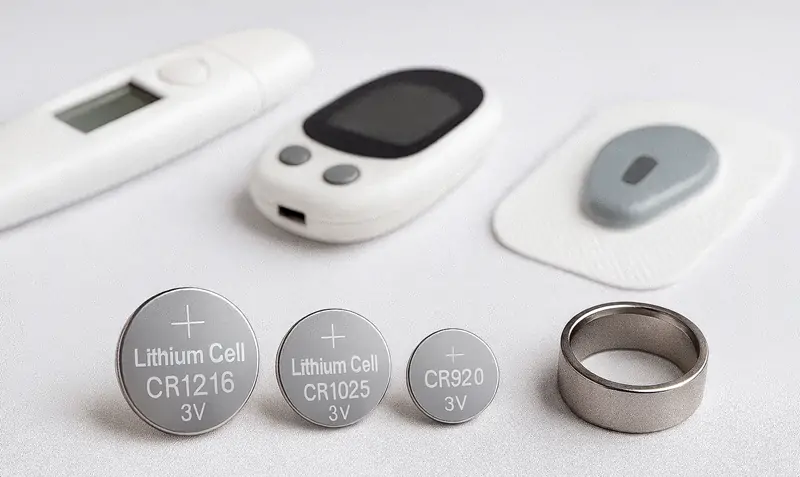
Advanced implantable neurostimulators utilize rechargeable lithium-ion batteries. These batteries feature a hermetically sealed design, allow for wireless transdermal charging, and must maintain a 15-year service life without swelling. External wearable insulin pumps and continuous glucose monitors employ miniature polymer batteries equipped with medical-grade safety layers.
Emerging Applications
Marine and Underwater Vehicles (AUVs, ROVs)
Autonomous underwater vehicles used for seafloor surveys employ either pressure-resistant lithium-ion battery housings (rated for 1 atmosphere) or pressure-compensated battery packs. Each pressure sphere provides 10 kWh of energy, supporting 48-hour missions at a depth of 3,000 meters.
Portable Power Station, Suitable for Camping and Emergencies
Manufacturers typically integrate lithium iron phosphate (LFP) or nickel-cobalt-manganese (NMC) batteries into suitcase-style units equipped with AC inverters and solar Maximum Power Point Tracking (MPPT) capabilities. Capacities range from 200 to 3,600 watt-hours. Demand for such products is surging in the camper van and emergency backup power sectors, driven by the need for pure sine wave output and rapid solar charging.
Portable Refrigeration and Cold Chain Logistics
Vaccine transport vehicles and active transport containers use 12V/24V lithium-ion battery packs to power their compressors, enabling operation for over 48 hours without an external power supply. A Battery Management System (BMS) reports GPS location, temperature, and battery health via an IoT network.
Wearable Exoskeletons (Industrial and Medical)
Powered exoskeletons for factory workers or paraplegic patients utilize back-mounted 48V lithium iron phosphate (LFP) battery packs. These systems require high-rate discharge capabilities to support lifting power and energy recovery during stair descent. Safety redundancy features include a dual-channel contactor shutdown mechanism.
Unmanned Aerial Vehicles (UAVs)
In addition to consumer-grade quadcopters, drones used for defense and inspection require smart 14S–22S battery packs equipped with self-heating capabilities to withstand cold weather and provide ballistic protection in the event of thermal runaway. Long-endurance solar-powered drones combine lithium-ion batteries with solar cells, enabling flight durations of up to several months.
Conclusion
Lithium-ion batteries are not a single technology but rather a platform, with applications ranging from micron-scale, ultra-thin wearable devices to gigawatt-hour-scale grid energy storage. Each specific application drives the chemistry, form factor, and safety engineering of lithium-ion batteries in different directions.